Research at SAMS

Safe, interactive autonomy for mobility systems

Our work brings dynamics, decision-making, learning, optimization, and control together across ground vehicles, aerial systems, and coordinated robot teams.

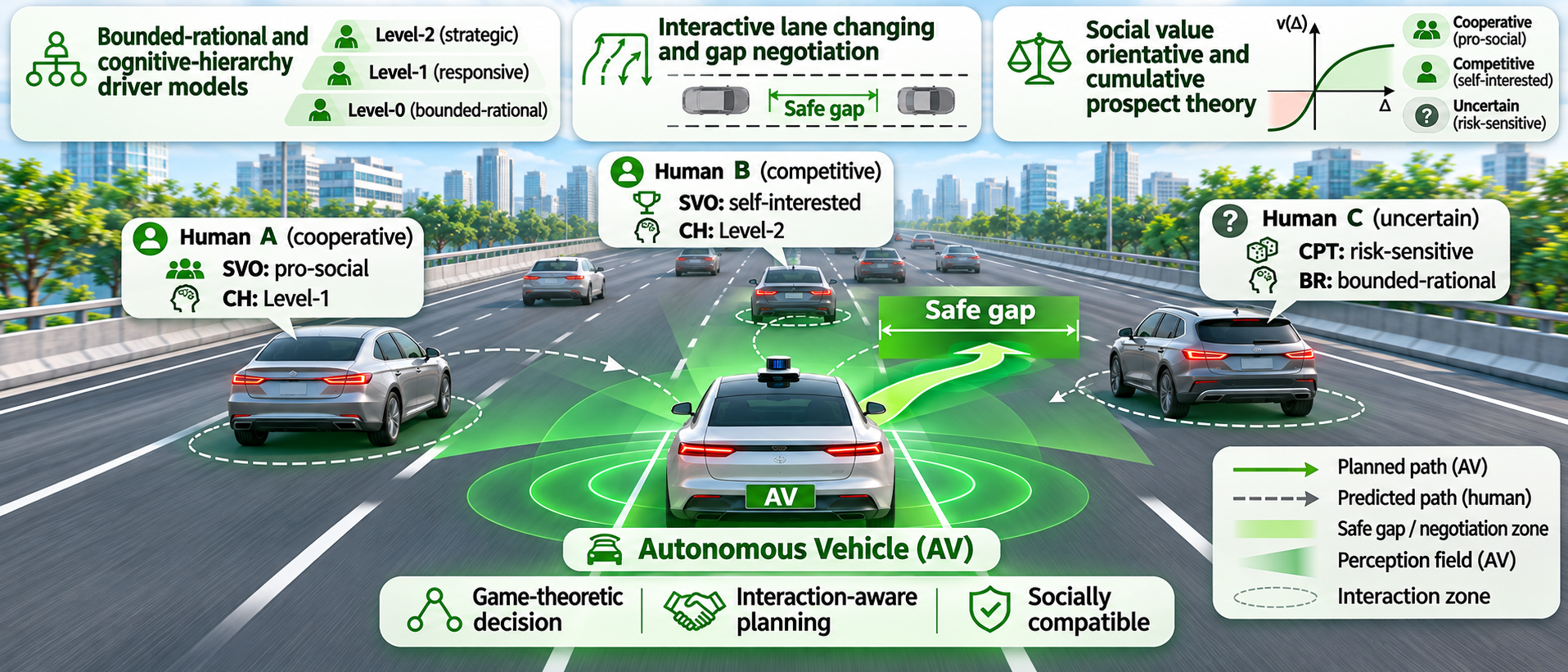
Socially compatible autonomous driving in mixed traffic, showing driver models, lane-change negotiation, and interaction zones
INTERACTIVE AUTONOMY

Socially compatible driving

Game-theoretic and interaction-aware autonomous-vehicle decisions for mixed traffic, including cooperative, competitive, and uncertain human behavior.

  • Interactive lane changing and gap negotiation
  • Bounded-rational and cognitive-hierarchy driver models
  • Social value orientation and cumulative prospect theory
Socially compatible autonomous driving in mixed traffic, showing safe control trajectories
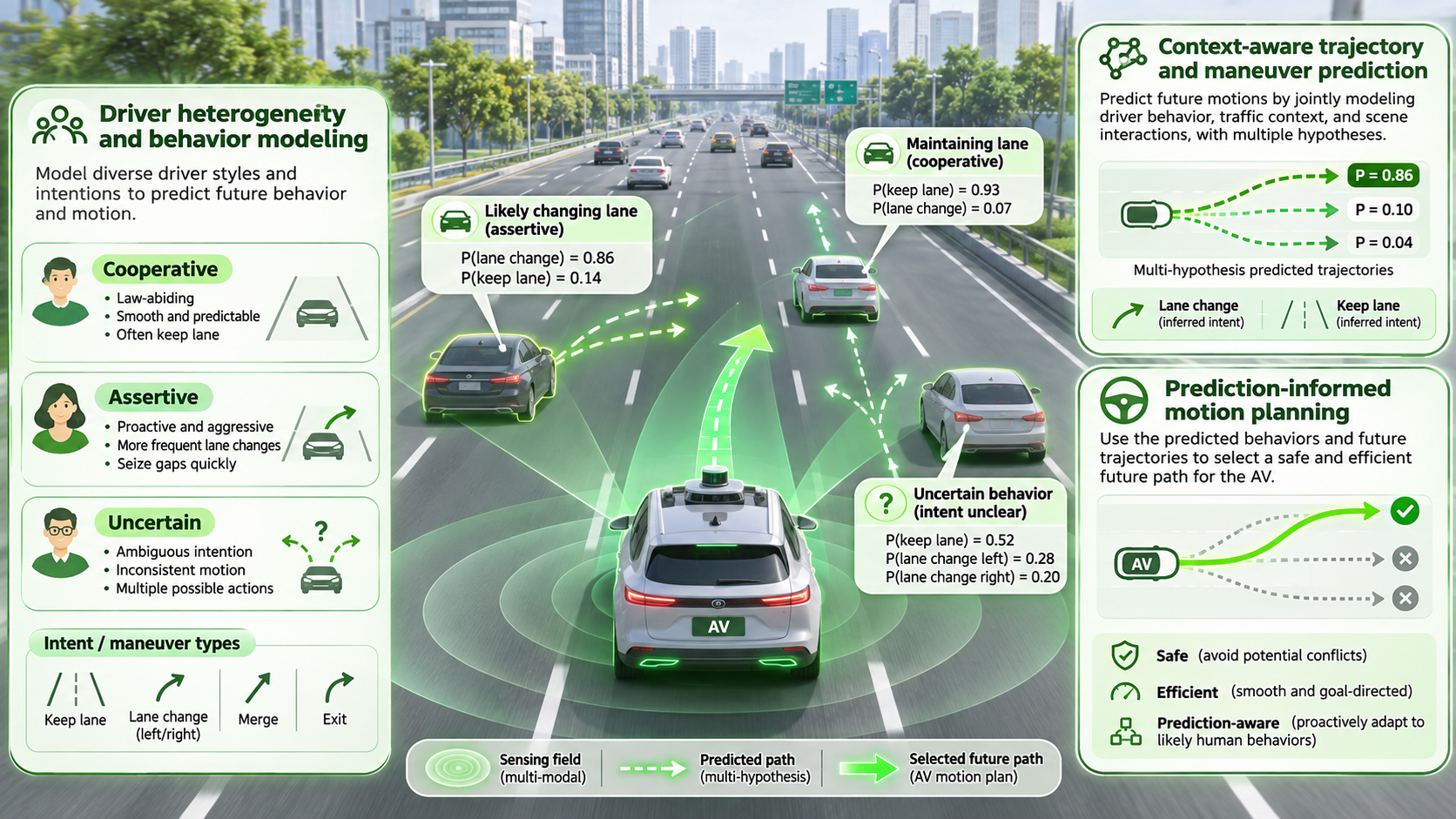
BEHAVIOR PREDICTION

Human behavior and motion prediction

Methods for estimating driver intent, preferences, and future motion so autonomous vehicles can anticipate the effects of their actions on surrounding road users.

  • Driver heterogeneity and behavior modeling
  • Context-aware trajectory and maneuver prediction
  • Prediction-informed motion planning
Socially compatible autonomous driving in mixed traffic, showing safe control trajectories
SAFE CONTROL

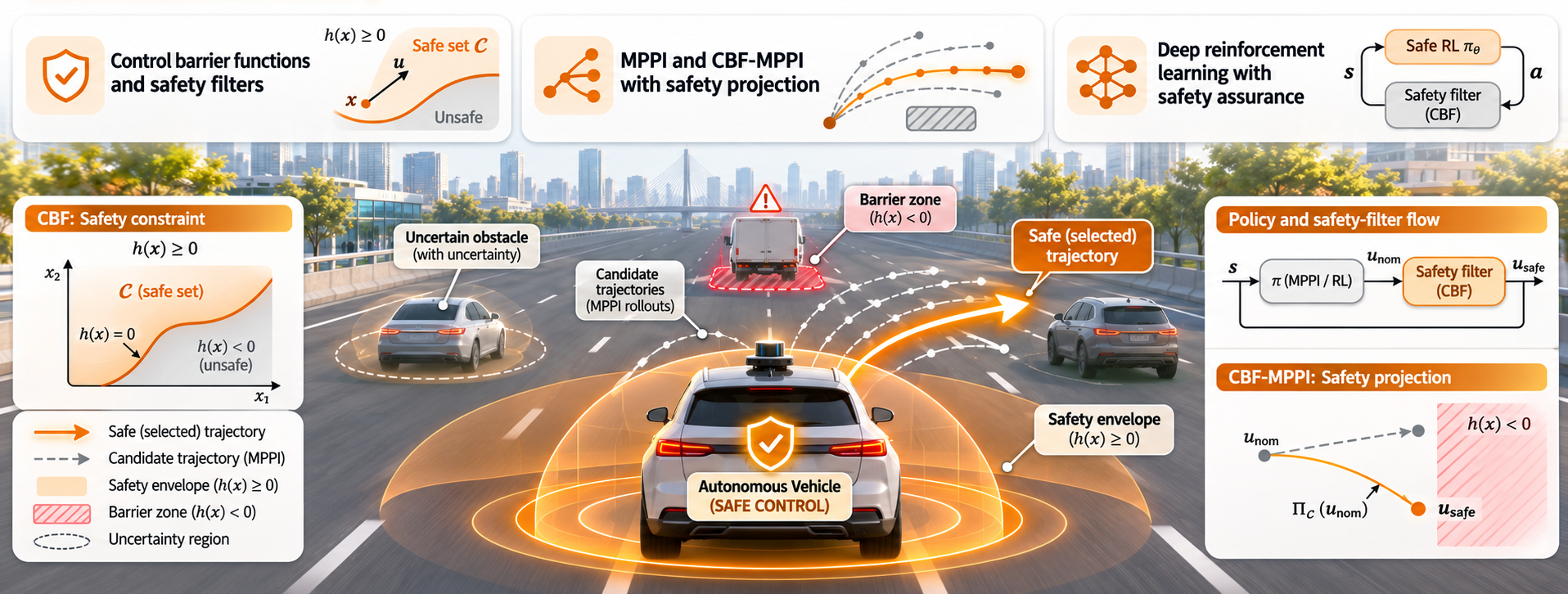
Safety-critical learning and control

Control and learning architectures that pursue performance while enforcing explicit safety requirements under uncertainty and changing environments.

  • Control barrier functions and safety filters
  • MPPI and CBF-MPPI with safety projection
  • Deep reinforcement learning with safety assurance
Socially compatible autonomous driving in mixed traffic, showing safe control trajectories
VEHICLE CONTROL

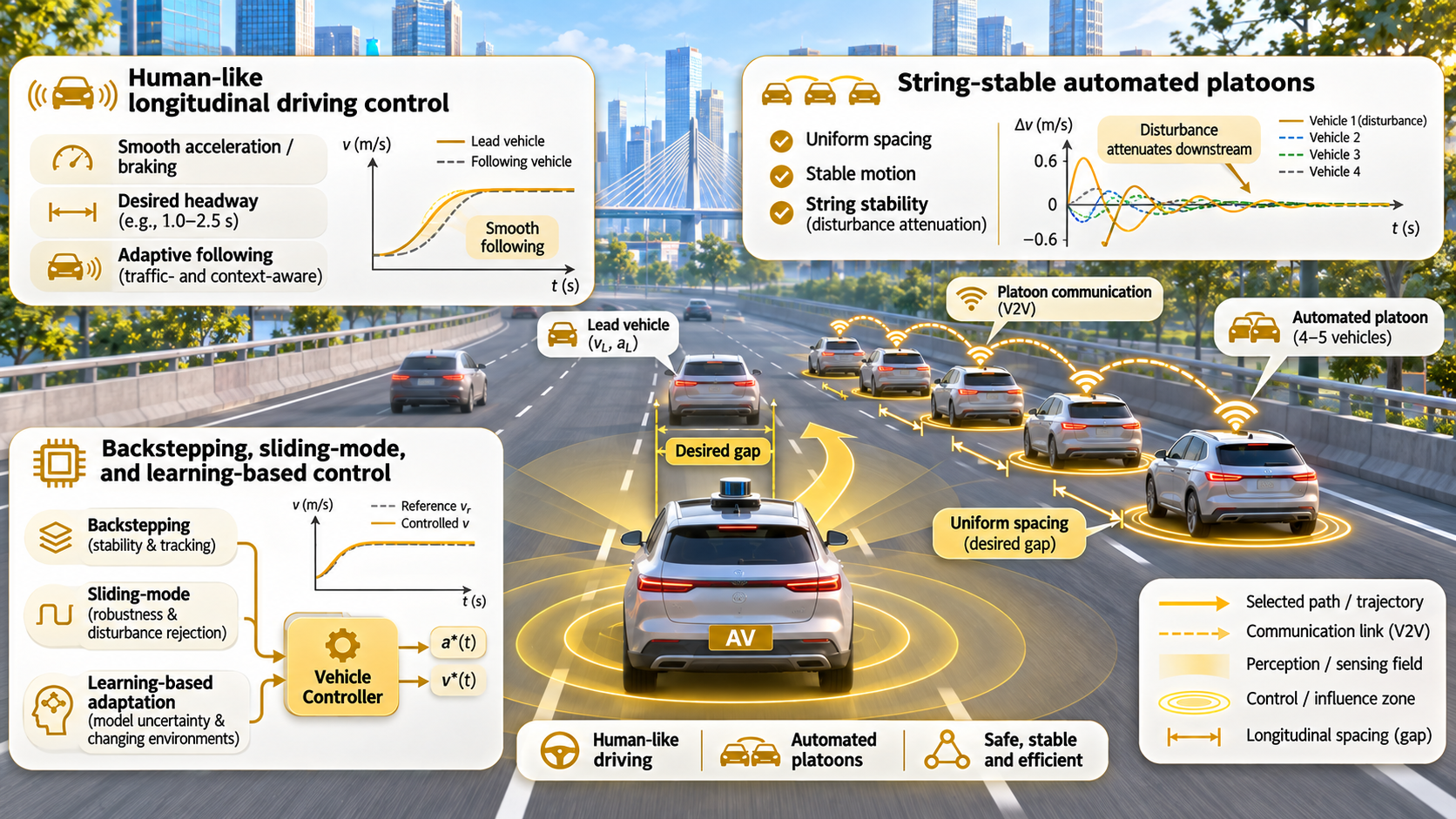
Human-like driving and automated platoons

Adaptive and robust control methods for individual vehicles and connected vehicle groups, designed to improve following behavior, traffic flow, and stability.

  • Human-like longitudinal driving control
  • String-stable automated platoons
  • Backstepping, sliding-mode, and learning-based control
Advanced Air Mobility
ADVANCED AIR MOBILITY

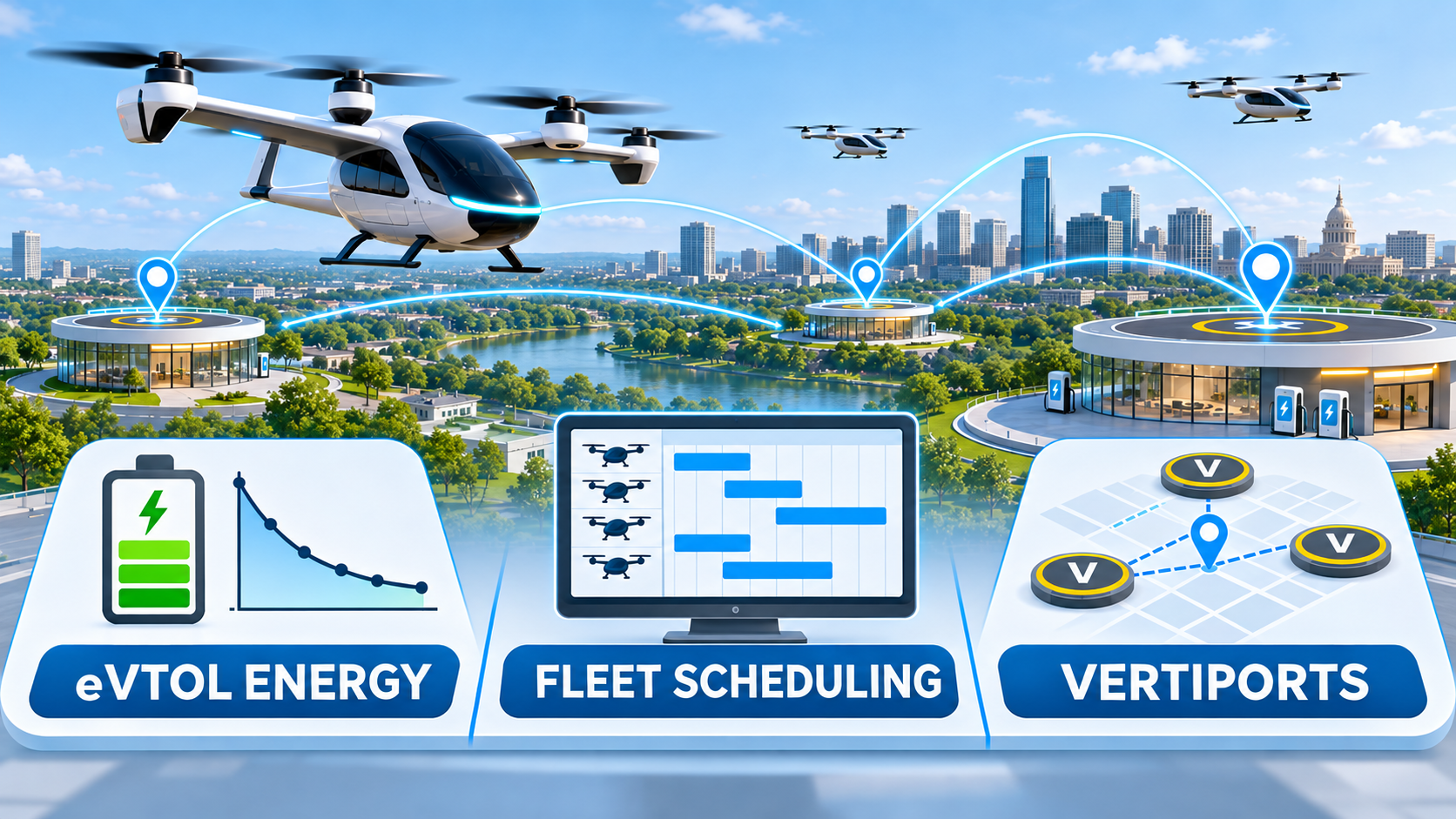
eVTOL energy and operations

Models and algorithms for planning and coordinating electric aircraft and supporting infrastructure across advanced air mobility networks.

  • Flight energy and battery-performance modeling
  • eVTOL dispatching, charging, and fleet scheduling
  • Vertiport and infrastructure coordination
Aerial coordination
MULTI-ROBOT SYSTEMS

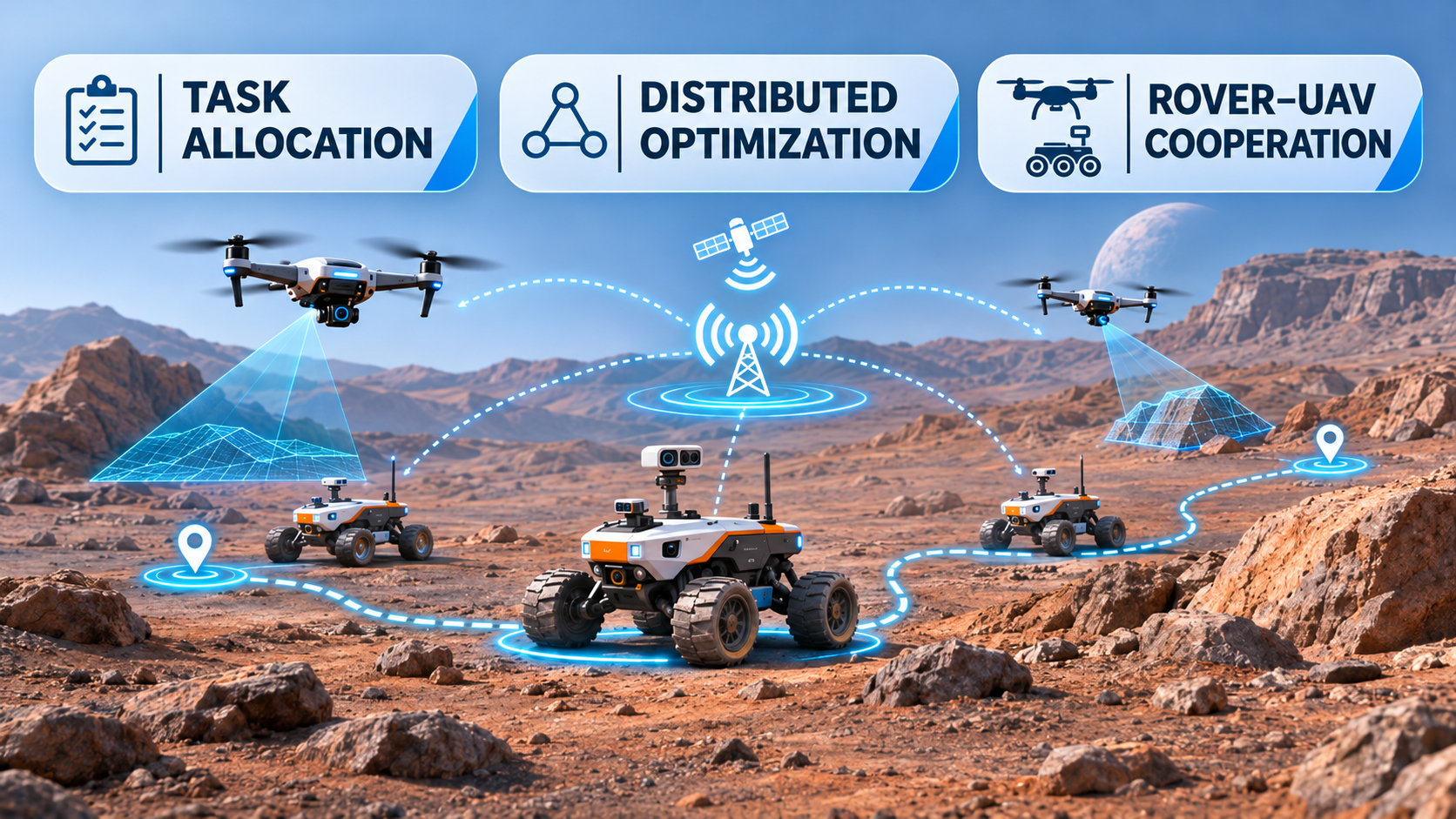
Distributed autonomy for robot teams

Scalable coordination strategies for heterogeneous ground and aerial robots operating with shared task, energy, terrain, and communication constraints.

  • Multi-robot task allocation and scheduling
  • Distributed optimization and ADMM
  • Rover–UAV coordination and planetary mobility
Socially compatible autonomous driving in mixed traffic, showing safe control trajectories
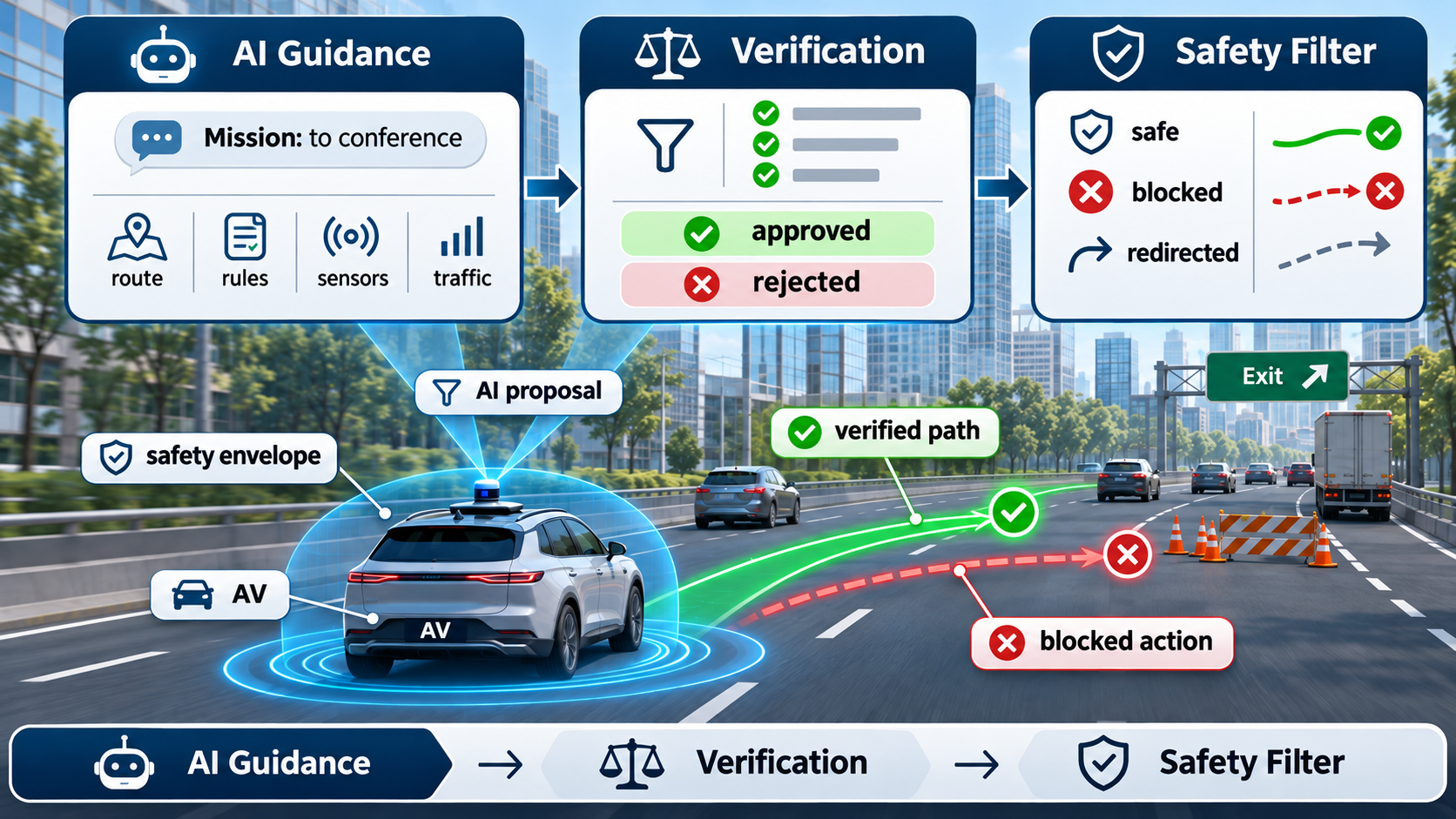
LANGUAGE-GUIDED AUTONOMY

Verifiable AI and language-model guidance

Emerging work on using foundation models to interpret goals and support high-level decisions while keeping motion authorization and safety enforcement in a verified control layer.

  • Tool-grounded mission and decision support
  • Independent verification of proposed actions
  • Safety filters that remain effective when AI advice fails